
Article Overview
What Does Projector Brightness Really Mean?Is Higher Brightness Always Better? Why 2000–3000 ANSI Lumens Is Ideal for Home Theaters?Why Brightness Needs Differ?How Screen Size and Room Lighting Affect Brightness?NexiGo’s Philosophy: Brightness in BalanceNexiGo Projectors Tuned for Cinematic BrightnessFAQPrime Day Special
Ends at July 18

Aurora Pro MKII
Next-Level 4K Tri-Color Laser Projector
$2699 $3499

How Many ANSI Lumens Do You Really Need for a Home Theater?
NexiGo | Jan 7, 2026
When shopping for a projector, one specification always seems to dominate the conversation: brightness. Scroll through product listings or walk into an electronics store, and you’ll see lumen numbers displayed in bold — 3,000, 4,000, even 5,000 ANSI lumens.
It’s easy to assume that brighter must be better. But when it comes to home theater projection, that assumption often leads to disappointment.
Quick answer: For most home theaters, 2000–3000 ANSI Lumens is the ideal brightness range. It delivers vivid, lifelike images without washing out colors, preserves contrast in dark scenes, and remains comfortable for long viewing sessions, even with mild ambient light.
At NexiGo, we call this philosophy Brightness in Balance: brightness that serves the story, not the spec sheet.
What Does Projector Brightness Really Mean?
Brightness is measured in ANSI Lumens, a standardized unit that quantifies how much light a projector emits across its image area. The higher the Lumen count, the brighter the projector is.
While ANSI Lumens are useful for comparing projectors, the number alone doesn’t tell the full story. Brightness determines visibility, but it does not define image quality.
In fact, perceived sharpness, depth, and realism are driven far more by contrast, color accuracy, and tone mapping than by raw luminance. A projector with moderate brightness and excellent contrast can look dramatically more cinematic and luminous than a much brighter projector with poor light control.
Key takeaway:
Brightness sets the ceiling, but contrast creates the picture.
Is Higher Brightness Always Better? Debunking This Common Myth
The idea that “More Lumens = Better Image” comes largely from commercial projection. Ultra-bright projectors in the 4000–5000 ANSI Lumens range are designed for:
- Conference rooms
- Classrooms
- Outdoor or daylight environments
In these spaces, brightness must compete with uncontrolled ambient light.
A home theater is different. In a dim or dark room, excessive brightness often leads to:
- Lifted blacks that turn gray
- Washed-out colors
- Flattened contrast
- Eye fatigue during long viewing sessions
Imagine watching a moody thriller or atmospheric sci-fi film in a dark room with an overly bright image. The subtle shadow detail disappears, and the emotional tone is lost.

Brightness Comparison at a Glance
| Brightness Range | Typical Use Case | Room Lighting | Image Characteristics | Comfort Level | Recommended For |
|---|---|---|---|---|---|
| 1500–2000 ANSI Lumens | Dark, dedicated home theaters | Full light control | Lower peak brightness, better suited for fully dark rooms | Comfortable in fully dark rooms when properly calibrated | Movie purists & night-time viewing |
| 2000–3000 ANSI Lumens | Home theaters & living rooms | Dim to moderate ambient light | Balanced brightness, vivid colors, strong contrast | Comfortable and immersive | Most home users & mixed-use viewing |
| 3000–4000 ANSI Lumens | Bright living rooms | Moderate to strong ambient light | Very bright image, reduced shadow detail | Can cause eye fatigue in dark rooms | Casual users & daytime sports |
| 4000–5000 ANSI Lumens | Offices, classrooms & daylight use | High ambient light | Maximum visibility, washed-out blacks | Fatiguing for long movie sessions | Presentations & business use |
Why 2000–3000 ANSI Lumens Is Ideal for Home Theaters?
For most modern homes, 2000–3000 ANSI Lumens strikes the perfect balance between clarity, comfort, and cinematic image quality.

Works in Real Home Environments
Few people watch movies in fully lit rooms. Most home setups — whether a dedicated theater, living room, or bedroom — have controllable lighting. In these conditions, 2000–3000 ANSI Lumens is:
- Bright enough to handle lamps or filtered daylight
- Controlled enough to preserve shadow detail
- Consistent across daytime and nighttime viewing
Instead of overwhelming your walls with light, the image feels natural and immersive.
Preserves Cinematic Contrast and Color
Excessive brightness reduces perceived contrast by pushing black levels upward. Balanced brightness allows dark scenes to remain rich and detailed while letting highlights shine naturally. When brightness is properly tuned:
- HDR content looks more realistic
- Color gradations remain intact
- Depth and dimensionality are preserved
This is why moderate brightness paired with strong contrast often looks more vivid than extreme brightness alone.
More Comfortable for Long Viewing Sessions
Brightness that’s too high can strain your eyes, especially in dark rooms. Just like staring at a phone screen at night, overly intense light forces your pupils to contract and causes your eyes to fatigue more quickly.
Projectors tuned within the 2000–3000 ANSI Lumens range offer:
- More gentle luminance
- Reduced eye strain
- Greater comfort during long movies, gaming sessions, or binge-watching
The image is bright enough to watch during the day, but dim enough that you can watch for hours without tiring out your eyes.
Home Theater vs Office Projectors: Why Brightness Needs Differ?
Office projectors prioritize visibility over nuance. They are meant for short sessions, static content, and bright environments. By contrast, home theater projectors are meant for long viewing sessions, darker rooms, and emotion-driven visual storytelling.
That’s why the projector brightness for an office space works against cinematic quality at home.
How Screen Size and Room Lighting Affect Brightness
Brightness needs to scale with screen size and ambient light, but not as aggressively as many expect. With modern laser light engines and efficient optics, 2000–3000 ANSI Lumens comfortably supports 100"–150" screens.
ALR or Fresnel screens further enhance perceived contrast. In these situations, proper tone mapping matters more than raw output of brightness.
NexiGo’s Philosophy: Brightness in Balance
At NexiGo, we don’t chase the highest ANSI Lumen count. Instead, we design projectors around one guiding principle:
We’re here to create a better movie-watching experience, not crank out the highest numbers for our spec sheet.
Our balanced, wholistic engineering focuses on:
- Precise brightness control
- Dynamic contrast optimization
- Accurate, true-to-life color reproduction
Through intelligent systems like our Scene Adapt Engine (SAE), brightness and contrast are continuously adjusted in real time to match each scene, so each and every lumen has a purpose.
NexiGo Projectors Tuned for Cinematic Brightness
We create projectors for every type of home theater, from dedicated dark rooms with black velvet curtains for total light control to bright, airy living rooms. Since every room has different lighting, it’s important to choose one that’s best for your needs.
Aurora Pro: Precision Brightness, Perfectly Tuned
The Aurora Pro is designed around the idea that brightness should enhance realism, not overpower it. Its intelligently modulated light output delivers vivid images while preserving shadow detail and color depth in both dark and semi-lit rooms.
Who it’s for:
Home theater enthusiasts seeking a refined cinematic experience with balanced brightness, accurate color, and immersive sound.
Why it works:
Instead of pushing excessive brightness, the Aurora Pro focuses on tonal balance — ensuring highlights remain natural and blacks stay rich without eye strain.

- Stunning 4K with Dolby Vision for lifelike contrast and depth
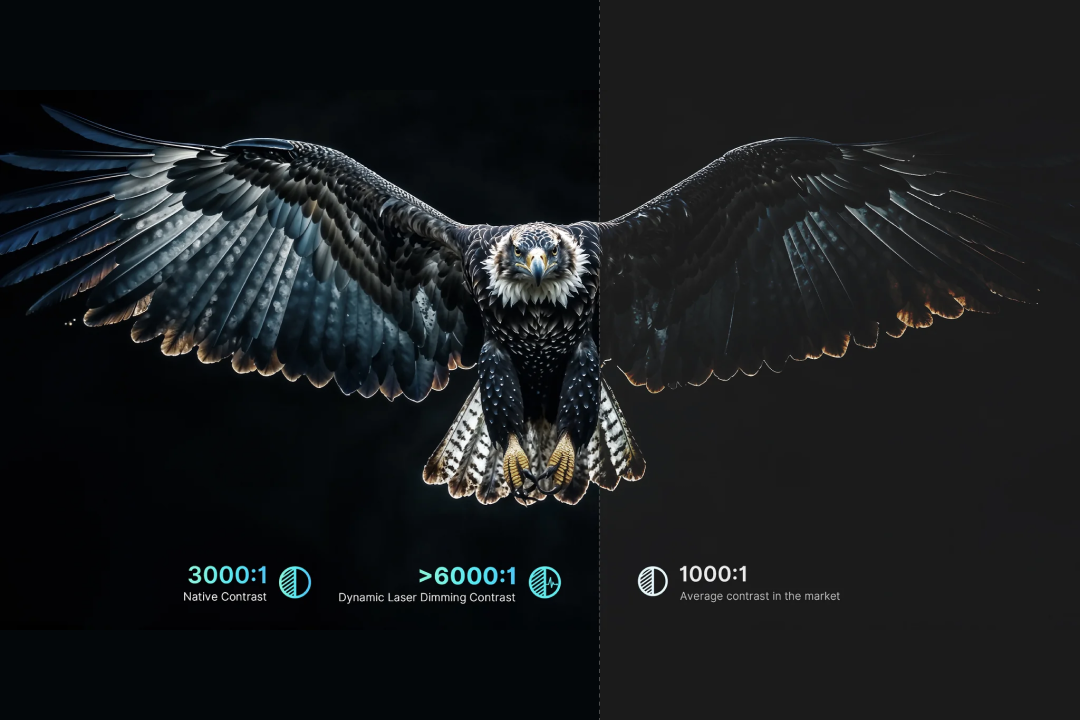
- 6,000:1 Dynamic Contrast for deeper blacks and enhanced detail
- 107% BT.2020 Wide Color Gamut with △E≈1 color accuracy
- 60 W speakers with Dolby Atmos, plus HDMI eARC support for external audio
- 4K at 120 Hz Input and 4.2 ms~ 8 ms latency is ideal for gaming and high-definition content.
- Brightness tuned for comfort, not intensity
Aurora Pro MKII: Precision Brightness for Dedicated Home Theaters
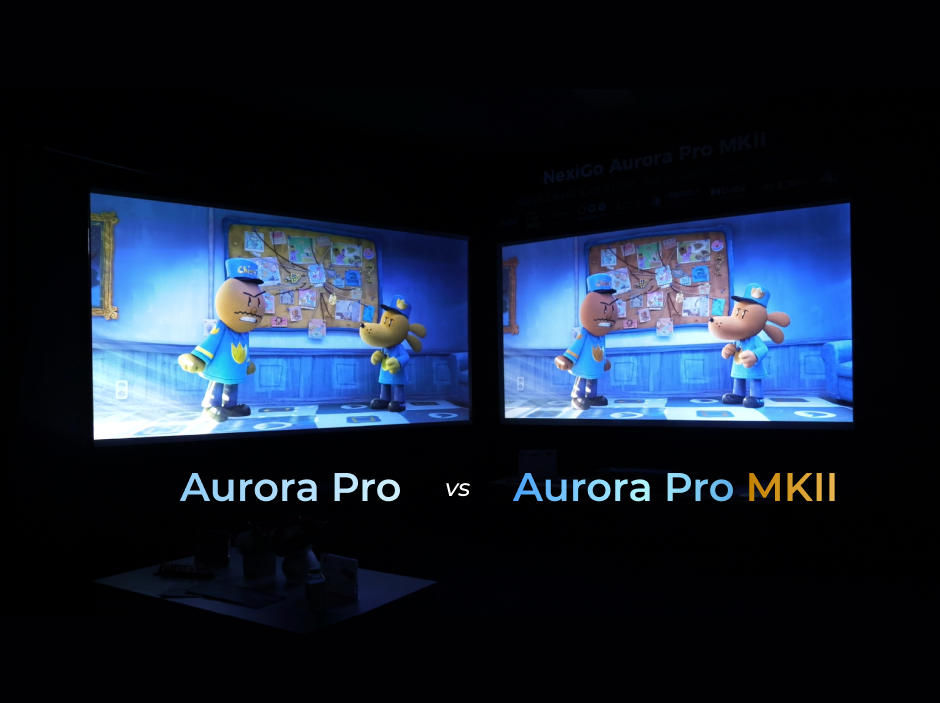
Building on the Aurora Pro, the MKII introduces an upgraded Scene Adapt Engine (SAE) with finer real-time control over brightness and contrast. The result is smoother transitions between dark and bright scenes, more realistic shadow detail, and a picture that feels effortlessly natural.
Who it’s for:
Dedicated home theater users who demand reference-level contrast, precise brightness control, and true cinematic immersion.
Why it works:
With 2400 ANSI lumens, the Aurora Pro MKII sits squarely in the ideal home-theater brightness range: powerful enough for impact, yet restrained enough to preserve contrast integrity.

- Dynamic Contrast Ratio over 30,000:1 for true blacks and radiant highlights
- Next-Gen ALPD® 5.0 Laser Engine with Dolby Vision & HDR10+
- 2400 ANSI lumens optimized for cinematic viewing
- 0.21:1 Ultra Short Throw Ratio, ideal for smaller rooms and large screens
- 4K at 120 Hz Input and 4.2 ms~ 8 ms latency is ideal for gaming and high-definition content.
- 107% BT.2020 color gamut with △E≈1 accuracy
- 60 W Dolby Atmos speakers for immersive audio
TriVision Ultra: Balanced Brightness for Living Rooms
Operating at approximately 2600 ANSI lumens, the TriVision Ultra delivers vivid HDR-like performance while maintaining excellent contrast and color accuracy. Its brightness is carefully balanced to handle everyday ambient light without sacrificing cinematic depth.
Who it’s for:
Movie lovers who want authentic cinematic visuals in a living room environment, without the premium price tag.
Why it works:
By pairing moderate brightness with high color fidelity, the TriVision Ultra creates images that feel rich, natural, and immersive — even outside a dedicated theater room.

- Hybrid RGB Max Tri-LED-Laser technology for bright, speckle-free images
- 2600 ANSI lumens with 110% BT.2020 Wide Color Gamut
- Outstanding out-of-box color accuracy (△E<1)
- 4K with Dolby Vision and HDR10+ support
- Hybrid RGB Max Tri-LED-Laser technology for bright, speckle-free images
- Auto Screen Adaptation for fast, easy setup
- Hidden Fire TV Stick compartment (stick not included) for a clean installation
Brightness Isn’t About Numbers. It’s About Experience.
When you sit down to watch a film, you’re not measuring lumens.
You’re feeling the glow of a city at night, the warmth of sunlight on skin, the tension hidden in deep shadows. These moments are what make cinema feel alive.
That’s why NexiGo rejects the “more is better” myth in favor of thoughtful engineering, where brightness, contrast, and color work in harmony.
Because true brilliance isn’t about flooding your screen with light.
It’s about revealing life within it.
That’s the NexiGo way. Every lumen has purpose, and every frame feels alive.
FAQ: Projector Brightness for Home Theaters
Like what we do? Stay tuned for more.
Whether you work at home or in the office, NexiGo provides a wide range of quality and affordable technology to elevate your daily life. Our products encompass everything from webcams and portable monitors to projectors and gaming accessories.
Articles we think you'll love