
Article Overview
What Actually Makes a Great Sports Projector? 1. Refresh Rate2. MEMC3. Brightness4. 4K Resolution5. HDR6. ALR ScreenThe Best Sports Projectors Worth Watching in 2026 1. NexiGo TriVision Ultra2. NexiGo Aurora Pro MKII3. BenQ TK710STi4. ViewSonic PX7475. Epson Home Cinema 3800Best Bedroom Projectors in 2026Common Mistakes to AvoidHow to Set Up Your Bedroom ProjectorFinal ThoughtsButtonPrime Day Special
Ends at July 18

Aurora Pro MKII
Next-Level 4K Tri-Color Laser Projector
$2699 $3499
Best Projectors for Sports in 2026: Build a Home Stadium Experience That Feels Like the Real Deal
NexiGo | Jun 1, 2026
A great sports moment is never just about the score.
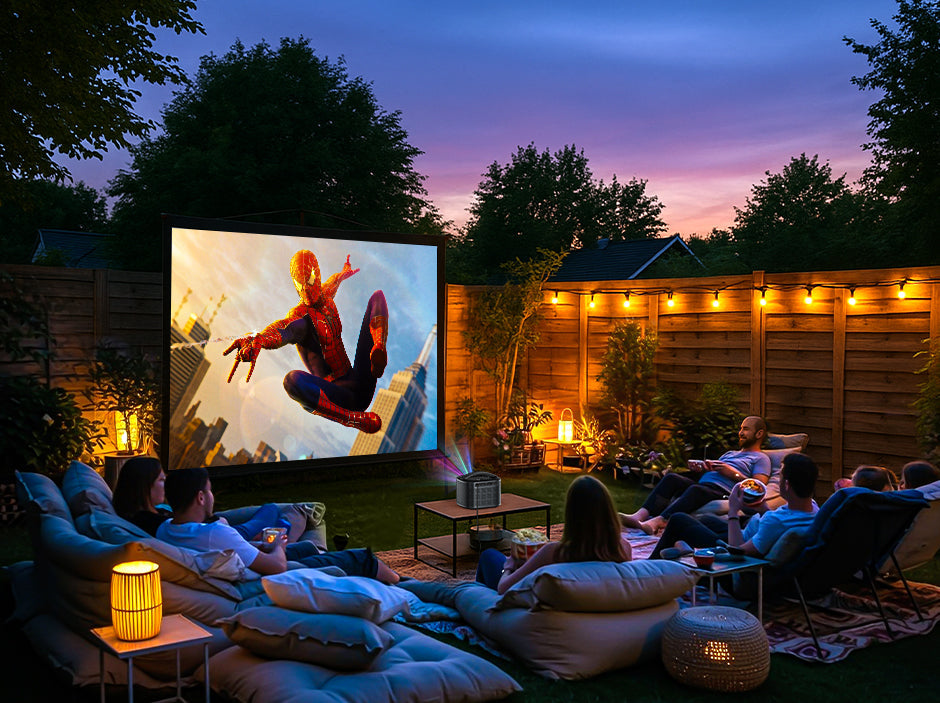
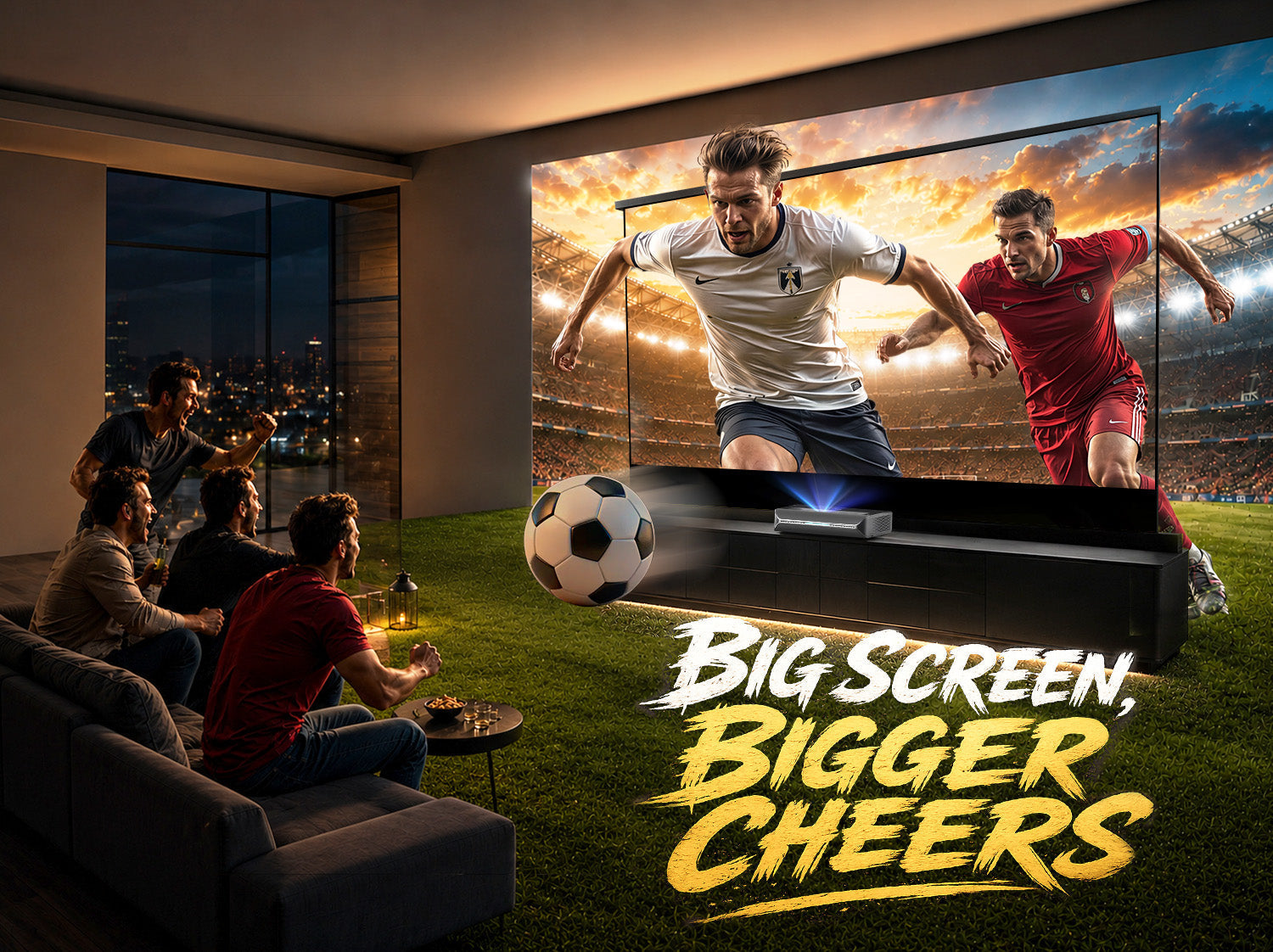
It’s the entire room erupting when a last-second goal hits the back of the net during the World Cup. It’s the tension before a game-winning NFL drive. It’s friends gathered around the backyard projector, yelling at the screen like they’re sitting courtside or trackside together.
That emotional energy is what makes sports special. And your display plays a much bigger role in that experience than most people realize.
A standard TV may be convenient, but when the game reaches those unforgettable moments, nothing matches the scale and immersion of a 120-inch or 150-inch projected image. A massive screen changes the way sports feel. Fast motion becomes more engaging. Stadium lighting feels more cinematic. Crowd noise feels more alive. You stop “watching” the game and start feeling inside it.
But sports are also one of the hardest types of content for a projector to handle well.
Fast camera pans can introduce blur. Daytime viewing can wash out the image. Poor motion processing can create ghosting around players and balls. Weak contrast can flatten turf textures and stadium lighting, making everything look dull and lifeless.
That’s why choosing the right projector for sports is very different from choosing one for movies.
In this guide, we’ll break down the most important features that actually matter for sports viewing in 2026. We’ll cover everything from refresh rates and brightness to HDR performance and ALR screens. At the end, we’ll highlight some of the best projectors for creating a true home stadium experience. Let’s get into it.
Key Points:
- Sports are one of the hardest content types for projectors. Fast motion, ambient light, and large screen sizes demand 120 Hz refresh rates, MEMC motion processing, and 2,500–3,000+ ANSI lumens
- 4K resolution and HDR (Dolby Vision or HDR10+) aren't just for movies. At 100"+ screen sizes they preserve sharpness, depth, and the atmospheric realism that makes live sports feel immersive
- An ALR (Ambient Light Rejecting) screen can improve daytime sports viewing as much as upgrading your projector, essential for living rooms, backyard setups, and watch parties
- The NexiGo TriVision Ultra leads for portability and all-around performance; the Aurora Pro MKII is the top choice for a dedicated home stadium setup with premium contrast and cinematic depth
What Actually Makes a Great Sports Projector?
For sports, three things matter more than anything else:
- Smooth motion performance
- High brightness
- Strong contrast and color accuracy
A projector can look fantastic in a dark room while you’re watching a movie, but struggle during a daytime football game or a fast-paced Formula 1 race. The unique requirements of daytime sports mean that you’ll need higher brightness and better motion handling to get the high same quality viewing experience.
If you want a projector that genuinely feels immersive during live sports, these are the specs worth prioritizing.
Projector Specs for Sports vs Movies
| Specification | Sports | Movies |
|---|---|---|
| Refresh Rate | 120 Hz or higher | 60 Hz standard, 24 Hz support preferred |
| Brightness | 2500–3000 ANSI Lumens | 1500–2000 ANSI Lumens |
| 4K | 4K resolution | 4K resolution |
| Other Features | HDR10+, MEMC | Dolby Atmos, Dolby Vision |
These features become even more important as screen sizes stretch beyond 100”. Not sure what MEMC is or why 120 Hz is important? Keep reading and we’ll go over all these specifications in more detail.
120 Hz Refresh Rate: Why It Matters More for Sports Than Movies

A 60 Hz projector may look perfectly fine when streaming Netflix, but once you switch to soccer, basketball, hockey, tennis, or F1, motion limitations become immediately noticeable.
This is because movies typically use a lower, more cinematic framerate of 24 fps, with the exception of some action and animated movies which use a higher framerate of 60 fps. This type of content only requires a 30 Hz and 60 Hz refresh rate, respectively.
Sports, on the other hand, require a much faster framerate to keep up with fast motion and quick camera pans. Most sports broadcasts are streamed between 60–120 fps which looks best on a 120 Hz display.
These higher refresh rates dramatically improve motion clarity, camera pan smoothness, fast-action tracking, and overall realism on large screens. So if you’ve ever noticed any motion blur behind the players or the ball, it could be because the refresh rate of your display is too low to handle sport broadcasts.
And the bigger the screen gets, the more important this becomes. Motion flaws that are barely visible on a 65-inch TV become very obvious at 120 inches.
MEMC: The Feature Most Sports Fans Overlook
For sports viewing, good motion processing is equally important as refresh rate. Look for features like MEMC (Motion Estimation and Motion Compensation), which help reduce blur and smooth out fast-moving action.
MEMC works by generating additional frames between existing frames to reduce motion blur and stuttering between frames. For sports content, where cameras constantly pan, zoom, and track movement at high speed, this can make an enormous difference.
Sports broadcasts are full of rapid camera transitions, fast-moving athletes, and sudden directional changes. Without good motion compensation, these scenes won’t show up well, especially on very large screens.
Brightness: The Key to Daytime Sports Viewing

Movies are usually watched in dark rooms. Sports are different. Most people watch games in environments with significant ambient light, including:
- Living rooms during the day
- Backyard parties
- Open-concept spaces
- Rooms with lights on
- Social viewing setups with multiple people moving around
If the projector isn’t bright enough, the whole image loses impact. Blacks become gray. The turf looks faded. It can be difficult to make out small details on the screen. That makes brightness one of the most important specs for sports viewing.
Recommended Brightness for Sports
- Dark theater room: 2000 ANSI lumens is usually enough
- Living room with ambient light: 2500–3000 ANSI lumens recommended
- Backyard or party environment: 3000+ ANSI lumens strongly preferred
4K: Why It Matters Even If Sports Broadcasts Aren’t Native 4K

A common misconception is that 4K doesn’t matter for sports because many broadcasts are still delivered in 1080p. In truth, it depends on your screen size.
While a 55” or 65” TV screen will look great in 1080p, once you move past 80” (the minimum size for many projectors), pixel density becomes critical. Lower-resolution images begin to look soft, loose, and less dimensional. 4K helps preserve image structure at large sizes.
That means sharper player outlines, better crowd detail, and less visible pixel structure. But the real benefit of 4K isn’t simply “more sharpness.” It’s maintaining immersion as the screen gets bigger.
A properly rendered 4K image feels tighter, more natural, and more cinematic, especially during live sports where motion, scale, and depth all matter simultaneously.
HDR: What Makes Sports Feel “Alive”

Brightness helps you see the game. HDR and color accuracy are what make you feel like you’re there in the stadium.
Poor HDR performance can make daytime turf look washed out, stadium lighting overly harsh, and shadow detail disappear into muddy blacks. Colors become unnatural and exaggerated instead of realistic. That matters more than people think.
Sports are emotional experiences built around atmosphere. It’s all about the deep green of a football field. The dramatic lighting of an NBA arena. The glow of a night race under stadium lights.
Projectors with Dolby Vision or HDR10+ can dynamically optimize brightness and contrast scene-by-scene instead of using a single static HDR profile. As a result, you’ll get better highlight control, more realistic lighting transitions, stronger perceived depth, and greater visual realism during live broadcasts.
ALR Screen: Do You Actually Need One for Sports?

If you watch sports during the day, the answer is very often yes.
An ALR (Ambient Light Rejecting) screen can improve sports viewing more than many people expect, sometimes even more than upgrading to a brighter projector alone.
This is because ambient light constantly weakens projected contrast. Sunlight from windows, ceiling lights, or outdoor lighting effectively “dilutes” the image. That’s why daytime sports sometimes look gray, foggy, low-contrast, or washed out.
An ALR screen is designed to reject unwanted ambient light while directing more projector light back toward viewers. Compared to a standard white screen, a quality ALR screen can significantly improve black levels, perceived brightness, color saturation, and image depth.
If your goal is to recreate a true sports-bar-style viewing experience at home, an ALR screen is one of the smartest upgrades you can make.
The Best Sports Projectors Worth Watching in 2026
1. NexiGo TriVision Ultra: The Ultimate Portable Sports Powerhouse
The NexiGo TriVision Ultra is one of the most complete sports projectors currently available for people who want both high-end performance and flexibility.
Its biggest strength is balance. It features:

TriVision Ultra
The Ultimate Portable Sports Powerhouse
- Stunning 4K Visuals with Dolby Vision & HDR 10+
- Support 4K@120Hz Input and 4.2~8ms Latency
- MEMC motion enhancement
- 2600 ANSI Lumens brightness
- No speckles, no colored fringing
- Up to 110% BT.2020 color gamut
- Extremely accurate color reproduction (△E≈1)
That combination makes it exceptionally strong for sports.
Fast-moving action remains sharp and fluid, while the wide color performance gives fields, jerseys, and stadium lighting a level of realism that feels far more premium than typical consumer projectors.
The built-in ergonomic handle also makes it unusually practical for sports parties. You can move it from a living room setup to a backyard viewing environment without turning the process into a major production.
Paired with its powerful built-in speaker system and support for massive screen sizes, the TriVision Ultra delivers a genuinely immersive “watch party” experience that works almost anywhere.
2. NexiGo Aurora Pro MKII: The Premium Home Stadium Experience
The NexiGo Aurora Pro MKII is designed for users who want their sports setup to feel as cinematic as a luxury home theater.
As an ultra-short-throw flagship projector, it combines premium image quality with serious motion performance.
Key highlights include:

Aurora Pro MKII
The Premium Home Stadium Experience
- Stunning 4K Visuals with Dolby Vision & HDR 10+
- Support 4K@120Hz Input and 4.2~8ms Latency
- MEMC motion enhancement
- 2400 ANSI Lumens brightness
- Low Rainbow Effect with Treatment from SAE
- 4000:1 native contrast ratio
- >30,000:1 Dynamic contrast ratio with SAE technology
Where the Aurora Pro MKII really stands out is contrast and image depth. Night games, arena lighting, shadow detail, and HDR highlights all feel more layered and cinematic than what most projectors in this category can deliver.
Its integrated audio system is also unusually powerful, featuring dual bass units and dual treble drivers that create a much larger soundstage than typical projector speakers.
For users building a dedicated sports room or premium living room setup, it’s one of the most complete “big game” experiences available in 2026.
3. BenQ TK710STi: The Daytime Sports Specialist
The BenQ TK710STi is built for bright-room viewing.
With up to 3200 ANSI lumens, it performs exceptionally well in environments where controlling ambient light is difficult. Afternoon football games, weekend sports gatherings, and casual daytime viewing are where this projector shines.
It features:
- 4K at 60 Hz refresh rate
- Support 1080p at 240 Hz input
- No MEMC, but strong motion sharpness during fast camera movement
- 3200 ANSI Lumens
- HDR10
- Short-throw projection
- Low-latency performance
While its color depth and contrast can’t fully match premium triple-laser projectors, its brightness-first approach makes it one of the strongest practical options for sports-heavy households.
4. ViewSonic PX747: The Budget-Friendly Big-Screen Option
The ViewSonic PX747 focuses on one thing above all else: delivering a huge image at a reasonable price.
Its standout feature is brightness.
With around 3500 ANSI lumens available, it can comfortably power very large screen sizes without looking overly dim, even in brighter environments.
It features:
- 4K support via pixel-shifting
- Up to 120 Hz input supported
- No MEMC support
- 3500 ANSI Lumens
- HDR10
For casual sports fans who simply want the excitement of giant-screen viewing without spending heavily, it remains a strong entry-level option.
5. Epson Home Cinema 3800 — The Comfortable Long-Session Performer
The Epson Home Cinema 3800 takes a different approach from many modern DLP competitors. Instead of chasing aggressive specs, it focuses on delivering a balanced, comfortable, natural-looking image through Epson’s 3LCD technology and pixel-shifting system.
It features:
- 4K support via pixel-shifting
- 60 Hz refresh rate
- No MEMC support
- 3000 ANSI Lumens
- HDR10
- Excellent viewing comfort during long sessions
- No rainbow effect common to some single-chip DLP projectors
For tournaments, playoffs, or all-day sports weekends, the Epson 3800 delivers a relaxed, consistent viewing experience that many users prefer.
Final Thoughts
A truly great sports setup should recreate the emotion of being there in the stadium, from the scale and the intensity to the atmosphere and the shared excitement. That’s what makes live sports unforgettable.
If motion clarity and portability matter most, the NexiGo TriVision Ultra is one of the strongest all-around choices available today.
If you want a premium cinematic sports experience with exceptional contrast and immersion, the NexiGo Aurora Pro MKII stands out as one of the most compelling ultra-short-throw options on the market.
Add a quality ALR screen, invite a few friends over, grab the pizza and drinks, and suddenly your living room starts feeling a lot more like a stadium.
FAQ
Like what we do? Stay tuned for more.
Whether you work at home or in the office, NexiGo provides a wide range of quality and affordable technology to elevate your daily life. Our products encompass everything from webcams and portable monitors to projectors and gaming accessories.
Articles we think you'll love